Your lead form is asking the wrong questions
By Emmanuel O. Awefada · 16 September 2026 · 5 min read
A form should sort people, not just collect them. Qualifying questions, branching, scoring, and the fields that quietly cost you submissions.
Most lead forms are built to collect a contact. Good ones are built to sort people. That difference decides whether your calendar fills with buyers or with polite conversations that go nowhere.
If you have ever finished a call thinking "I knew in the first two minutes this was not a fit", your form let you down. It gathered a name and an email when it could have told you the budget, the timeline and the actual problem before you ever picked up the phone.
The two jobs a form has to do at once
A form has to be easy enough that the right person finishes it, and specific enough that the wrong person filters themselves out. Those pull in opposite directions, and most people only optimise one of them.
Strip every field and you get volume with no signal. Ask twenty questions and you get silence. The answer is not a middle number of fields. It is asking a small number of the right questions, and letting the form change based on the answers.
Ask the qualifying question early, not last
Put the question that decides fit near the top, not buried at the end where only the patient reach it.
For a service business that is usually one of three things. What are you trying to fix, how soon do you need it, and what have you already tried. Budget can wait if the first three are strong.
The value of asking early is not just data. It sets expectations. A form that asks "what is the problem in one sentence" tells the reader this is a business that thinks before it sells, which is a different feeling from a form that only wants their number so somebody can ring them.
Let the form branch
This is the part most people never switch on, and it is the biggest single upgrade available to a lead form.
Branching means the next question depends on the last answer. Someone who says they need help this month sees a different path from someone browsing for next year. A person who says they already have a funnel gets asked what is broken. A person who says they have nothing yet gets asked what they sell.
Three practical patterns worth stealing.
Show and hide. Only ask about existing tools if they said they have some. Every irrelevant question you remove raises the chance the form is finished.
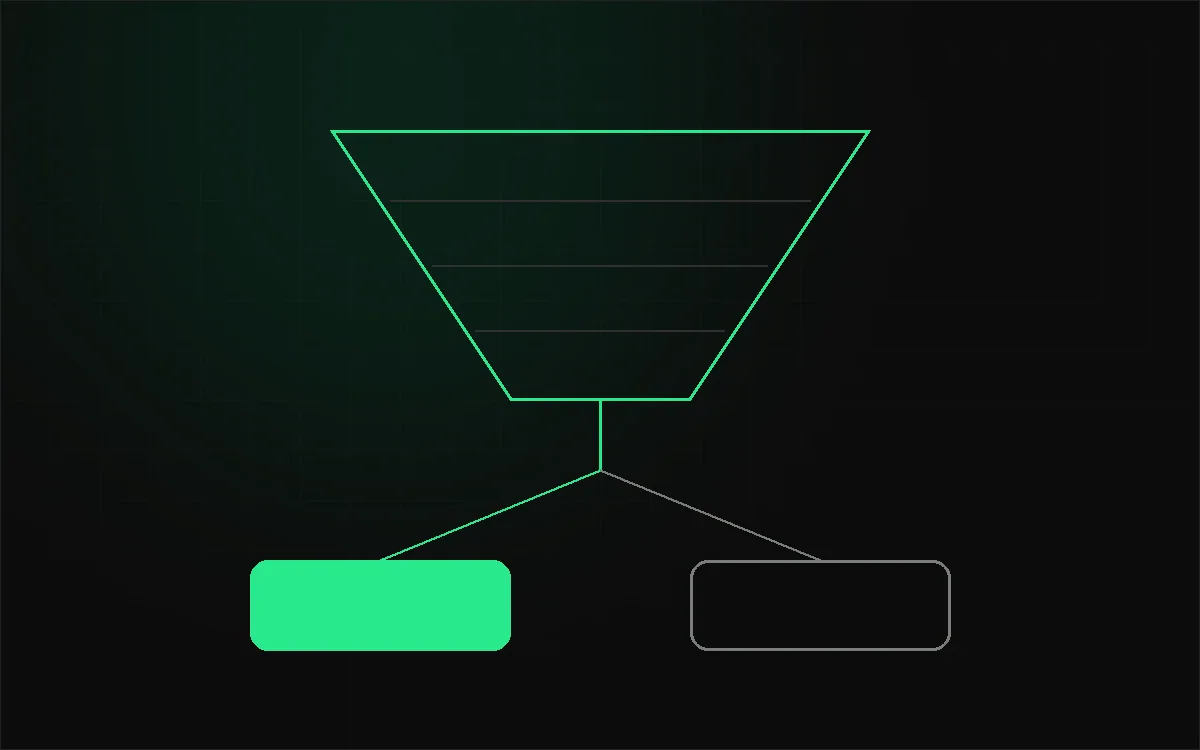
Redirect by answer. Send the ready to buy path straight to your calendar. Send the not yet path to a resource and an email sequence. Same form, two outcomes, no wasted calls.
Disqualify politely. If someone is clearly outside what you do, say so on the spot and point them somewhere useful. You lose a lead you were never going to serve and you keep a good reputation, which is a trade worth making every time.
Score it, do not just collect it
A simple score beats a complicated one. Give points for the answers that predict a good client and subtract for the ones that predict a difficult one. Timeline this month, existing revenue, a clearly described problem, all positive. No budget, no decision maker, vague goal, all negative.
You do not need a data science project. You need a threshold that decides who gets your calendar link immediately and who gets a nurture sequence instead. Get that one rule right and your week changes.
The fields that quietly cost you submissions
Phone number, when you will never call. It reduces completions. Keep it only if calling is genuinely part of your process.
Company name, for a service sold to individuals. Noise.
Anything you could look up yourself. If you can find their website from their email domain, do not ask for it.
How did you hear about us, as a free text box. People type nonsense. If you want the source, capture it automatically from the link they arrived on, not from their memory.
That last one matters more than it sounds. Every form should quietly record where the person came from, which page they were on, and which campaign sent them. You will want that data the first time somebody asks whether the ads are working.
Handle the almost finished
A large share of people start a form and stop partway. Most businesses treat that as nothing happened. It is not nothing. Somebody typed their name and their email and then hesitated.
If your form can create the contact on partial completion, you can follow up with the people who nearly enquired. One message, no pressure, referencing exactly where they stopped. It recovers a meaningful slice of enquiries that you currently never see.
Write the confirmation like a human
The screen after submit is the most ignored page in marketing. It is also the moment of highest intent in the entire relationship.
Say three things. What just happened, what happens next and when, and one thing they can do right now. That last one should almost always be booking a time, because someone who has just filled in a form is as warm as they will ever be.
Do not write "thank you for your submission". Nobody has ever said that out loud.
Test it like a stranger
Fill in your own form on your own phone, on mobile data, with one hand, standing up. That is how most of your leads do it. Notice how many taps it takes, whether the keyboard covers the next field, whether an error message tells you what went wrong or just turns something red.
Then have somebody who does not work with you try it and say out loud what they are thinking. You will learn more in four minutes than in a month of guessing.
What good looks like
Fewer calls, better calls. You stop meeting people who were never going to buy, and you start meeting people whose problem you already understand before you say hello. Your notes are richer, your proposals are faster, and your close rate goes up without changing anything about how you sell.
The form did that. Not the pitch.
What to do next
Open your current form and count the questions that help you sell versus the questions that only help you file. If the second number is bigger, you have found this week's job.
If you want it rebuilt so it qualifies, branches and routes people to the right next step automatically, bring me what you have now and we will fix it together.
Want this built properly the first time? Bring me what you have now and we will map it together.
- Funnels
- CRO