Stop rewriting the same message in twenty places
By Emmanuel O. Awefada · 16 September 2026 · 5 min read
Placeholders, tags and lists that maintain themselves. The unglamorous work that makes every future change cheap.
Your phone number appears in forty two places. Your booking link is in every sequence you have ever built. Your opening hours are in the confirmation email, the reminder, the receipt and three pages of the site.
Then you change your number, or your booking link, or your hours. Somebody spends a morning hunting them down, misses nine, and for the next year a fraction of your customers get old information from a business that looks careless.
This is the least interesting problem in your marketing and one of the most expensive, because it makes every future change slow enough that you avoid making changes at all.
Write it once, reference it everywhere
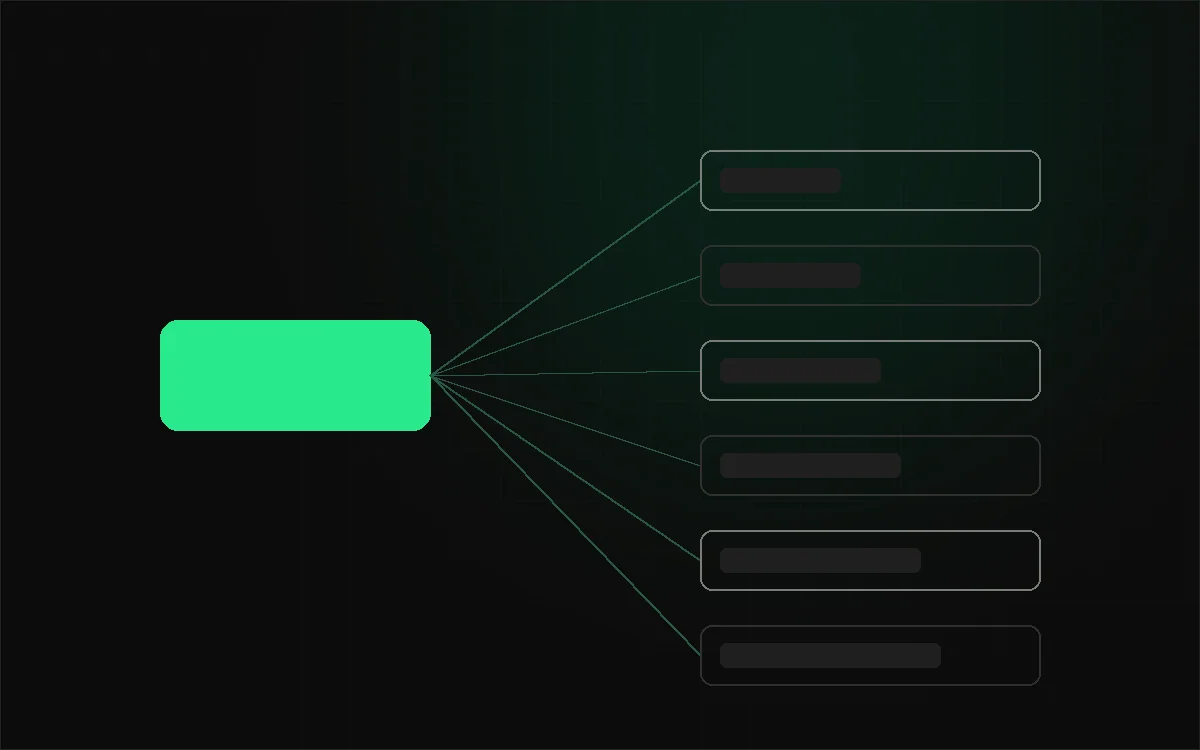
The fix is a placeholder. Instead of typing your booking link into a message, you insert a reference to it. The system swaps in the real value when the message goes out.
Change the value in one place and every message, page and sequence updates at once. No hunting, no missed ones.
The things worth storing this way are the ones that are true for your business rather than for a particular customer. Your booking link. Your phone number. Your support email. Your address. Your opening hours. Your current offer name and price. The name of the person who signs your emails.
That last one saves entire afternoons the first time somebody joins or leaves the team.
Keep customer details separate
There are two kinds of placeholder and mixing them up causes most of the confusion.
Business level values are the same for everybody. Your address, your link, your hours.
Contact level fields are different for each person. Their first name, the service they bought, their appointment time, their account manager.
Both get inserted the same way, which is why people conflate them. The discipline is simple. If the answer changes per person, it belongs on the contact record. If it is the same for everybody, it belongs in your business values.
Always set a fallback
A message that opens "Hi ," has told the reader they are receiving an automated blast. It is a small thing that quietly undoes the personal tone you spent effort creating.
Every personalised field should have a default. First name falls back to "there". Company name falls back to nothing, and you write the sentence so it still reads correctly when empty. Appointment time should never be optional in a message that depends on it, so if it is missing, the message should not send at all.
Test this by sending yourself a version with the fields deliberately empty. It takes two minutes and it is the difference between polished and sloppy.
Organise contacts by what you will actually do with them
The same discipline applies to how you file people. Most databases end up with hundreds of tags, half of them duplicates with different capitalisation, and nobody knows which ones anything depends on.
Tags should describe one of three things. Where somebody came from, what they are interested in, or what stage they are at. Nothing else. If a tag does not change what you would send somebody, it is a note, not a tag.
Agree on the format and stick to it. Lower case, no spaces, and one word for each concept. Decide whether it is "webinar" or "webinars" once, and never allow both to exist.
Let the lists build themselves
A saved list that updates itself is worth far more than a list you built by hand in March.
Define the rule instead of the members. Everybody who enquired in the last thirty days and has not booked. Everybody tagged for a service who has never bought it. Everybody who attended but did not sign. The list keeps itself current as people move in and out, and you can trigger automations from it.
This is what turns a database into an asset. A static export is a snapshot of a moment that has already passed. A rule is always true.
Clean up before you build more
If your database is already a mess, resist the urge to build new automations on top of it. You will just make the mess run faster.
Spend an hour doing this instead. List every tag and sort by how many contacts carry it. Merge the duplicates. Delete the tags nobody uses, after checking nothing depends on them. Write one sentence per surviving tag saying what it means and who adds it.
Then do the same for your placeholders. Put every business value in one place, name them plainly, and replace the hard coded copies in your messages as you touch them.
It is unglamorous work and it pays for itself the first time you change something important.
What good looks like
Changing your phone number takes ten seconds. Launching a new offer means updating one value rather than editing thirty assets. A new team member can read your tag list and understand how the business thinks about its customers.
And you stop being afraid to change things, which matters more than it sounds. Businesses that find changes expensive stop making them, and stagnation is usually a systems problem wearing a strategy costume.
What to do next
Open the last automated message you wrote and count how many pieces of information in it would have to be edited by hand if something about your business changed. That number is your exposure.
If you want the whole thing tidied, placeholders centralised, tags rationalised and lists that maintain themselves, bring me your account as it stands. Mess is normal, and it is usually a shorter job than people expect.
Want this built properly the first time? Bring me what you have now and we will map it together.
- CRM
- Systems