The follow up that runs whether you remember or not
By Emmanuel O. Awefada · 16 September 2026 · 6 min read
Most businesses do not have a lead problem, they have a gap problem. The four automations worth building before anything clever, and how to test them safely.
A lead fills in your form at 9:40 on a Tuesday night. You see it at 8:15 the next morning, you are already late for something, and you tell yourself you will reply properly after lunch. By the time you do, they have spoken to two other people. Nothing about your service was the problem. The gap was the problem.
Most businesses I speak to do not have a lead problem. They have a gap problem. The gap sits between the moment someone raises their hand and the moment a human being responds, and every hour inside that gap costs you conversations you already paid for.
The fix is not working harder or checking your phone more often. The fix is building a small machine that answers for you while you sleep, and then handing you the ones worth your time.
What an automation actually is
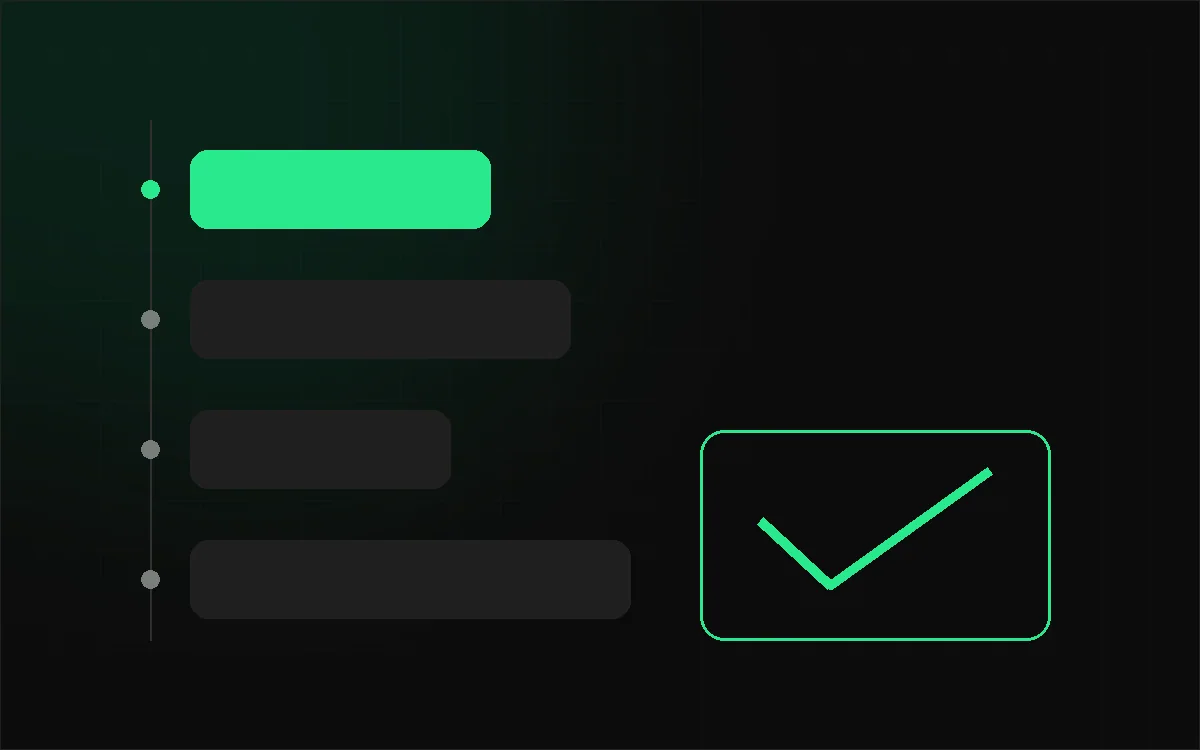
Strip away the software names and every automation has three parts.
A trigger is the event that starts it. A form submitted, a call missed, a payment taken, an appointment booked, a tag added. Something happened, and the system noticed.
A condition is the question it asks before acting. Is this person already a customer? Did they come from the paid ad or the newsletter? Have they already booked? Conditions are what separate a system that feels personal from one that spams everybody equally.
An action is what it does. Send the text, wait two hours, notify you, move the deal to a new stage, add a note.
That is the whole model. Trigger, condition, action. Once you can see a process in those three words, you can build it, and more importantly you can explain it to somebody else later when it breaks.
Start with the reply you never send fast enough
If you automate one thing this month, make it the first response.
Someone enquires. Within sixty seconds they get a message that does four jobs. It confirms you received the enquiry, it says who you are, it tells them exactly what happens next and when, and it gives them one thing to do while they wait. That one thing is usually a booking link.
Write it in the voice you would use on the phone. The point is not to sound automated but polished. The point is to sound like you, quickly.
Here is the version I use as a starting point for clients, then adapt.
Thanks for reaching out, [first name]. I have got your message and I will read it properly today. If you would rather skip the back and forth, here is my calendar. Grab any slot that suits and we will talk it through.
Short. Human. One action. That message alone recovers more revenue than most redesigns.
The four automations worth building before anything clever
- The instant reply. Covered above. Trigger is the form or the enquiry, action is the message, condition is that they are not already a client.
- The appointment reminder. Trigger is the booking, actions are a confirmation immediately, a reminder the day before, and a short one an hour ahead. No shows are rarely rudeness. They are usually forgetfulness plus a calendar invite nobody added.
- The no show recovery. Trigger is the appointment marked as a no show, action is a message with the booking link and no guilt in it. People are embarrassed when they miss a call. Make it easy to come back and most of them will.
- The quiet re engagement. Trigger is a contact with no activity for a set number of days, action is one message that asks a real question rather than announcing that you are checking in. Checking in is not a reason to open an email.
None of these require a clever tool. They require somebody to sit down once and decide what should happen, which is the part most people skip.
Where these builds go wrong
Automating a message that was never good. If your follow up does not work when you send it by hand, sending it automatically just spreads the problem faster. Write the message, use it manually for a week, then automate the version that got replies.
No exit. Every sequence needs a way out. If someone books, the chasing stops. If someone replies, the sequence pauses and a human takes over. Systems that keep chasing people who already said yes do real damage, and they are the most common mistake I find in an audit.
No handoff. Automation should carry a lead to the point where a conversation makes sense, then get out of the way. The goal is not to remove you from the process. The goal is to remove you from the parts that do not need judgement.
Nobody knows it exists. Six months later, nobody remembers what fires when, so nobody dares change anything. Name every automation in plain words and write one sentence inside it saying what it is for. Your future self will thank you.
How to test before it touches a real lead
- Use your own details. Create a contact with your real name, email and number, and send it down the exact path a customer would take.
- Fill in the real form on the real page. Not a preview and not a test button. The live thing.
- Watch what arrives. Note the order, the timing, and how each message reads on a phone rather than a laptop.
- Book halfway through the sequence. Confirm the chasing stops. This is the exit nobody tests.
- Reply to the first message. Confirm the second one does not arrive anyway.
- Mark yourself as a no show. See what happens, and whether it reads kindly.
Then break it on purpose, because the failures above are the ones that reach real customers.
Ten minutes of this saves you the email that begins with the words "I already booked, please stop messaging me".
What good looks like after a month
You stop finding enquiries you forgot to answer. Your calendar fills without you typing the same three sentences forty times a week. The people who reach you have already had a decent experience before you say a word, which changes the tone of the call before it starts.
And you get something less obvious but more valuable. Because every step is recorded, you can finally see where people stop. Fifty enquiries, thirty replies, twelve bookings, nine attended. Those four numbers tell you what to fix next, and you cannot get them from a busy inbox.
What to do next
Pick the single automation that would have saved you the most money last month. For most people that is the instant reply, not the clever nurture sequence with eleven branches. Build that one, test it on yourself, and leave it running for two weeks before you add anything else.
If you would rather have it mapped and built properly the first time, that is what I do. Bring your current process, even if it is sticky notes and good intentions, and we will turn it into something that runs without you.
Want this built properly the first time? Bring me what you have now and we will map it together.
- Automation
- Systems